
Laneway Home Insurance in Ontario
Insurance coverage for laneway homes, garden suites, and detached secondary dwellings across Ontario. Humberview Insurance helps property owners insure laneway houses used for extra rental income, more family living space, or guest suites.
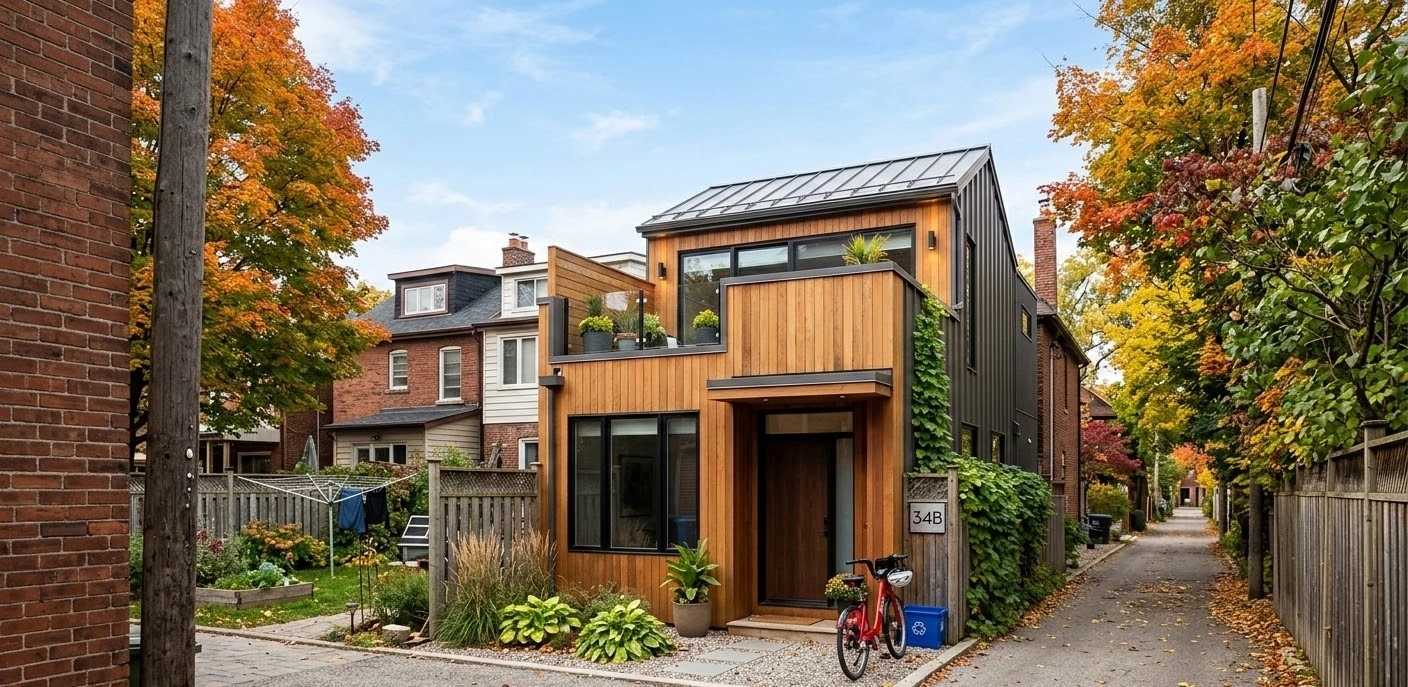
Laneway houses—also known as garden suites or detached secondary dwellings—are becoming increasingly common across Toronto and other Ontario cities as homeowners look for ways to add additional living space or generate rental income. These homes are typically built behind the main residence on the same lot and can be used for long-term tenants, family members, or guest accommodations. Because a laneway house is a fully livable dwelling with its own kitchen, plumbing, and utilities, insuring it properly requires careful consideration beyond standard detached structure coverage.
Humberview Insurance has been helping property owners across Ontario protect their homes since 1982, with our main office located in Toronto. We are an experienced insurance broker specializing in home insurance and landlord insurance, we understand the unique considerations involved when a property includes multiple dwellings on the same lot. Whether you are building a laneway house, renting it out, or using it for additional family living space, our team can help you arrange the proper laneway home insurance coverage to protect the entire property.
Types of Laneway Home Insurance We Can Help With

Laneway Builders Risk Insurance
- Required when a laneway house is being built or constructed
- Protects the structure while it is under construction
- May cover construction materials on site and in transit
- Protection for damage caused by fire, theft, vandalism, or severe weather
- May include liability exposures related to the property during construction
- Understanding of the entire property including main dwelling essential
- Coverage typically ends once construction is complete or the building is occupied

Laneway Rental Property Insurance
- Designed for laneway houses used as rental properties
- Insurance needs differ from a standard homeowners policy
- Provides property coverage for the laneway dwelling
- Liability protection if a tenant or visitor is injured on the property
- Coverage for loss of rental income after an insured claim
- Can be structured as part of a larger multi-unit or landlord policy
- Understanding of the entire property including main dwelling essential

Laneway House Insurance – Owner or Family Occupied
- Used when owner resides at the property
- With homeowner typically living in the main dwelling or laneway home
- Laneway can typically be occupied by family members or their guests
- Usually insured under a homeowners insurance policy
- Laneway typically recognized as a secondary residence
- Some insurance companies can treat it as a detached structure under the home policy, but it must be insured for an adequate amount
- Instead of premises liability, the owner’s personal liability from the homeowners policy applies to the whole property

Why Humberview Insurance for Laneway & Garden Suite Coverage
- Over 40 years of experience helping Ontario property owners since 1982
- We understand how laneway homes are treated differently by insurers
- Guidance from construction stage (builders risk) through to rental or homeowner coverage
- Access to multiple insurance markets for both standard and non-standard property setups
- We structure policies to avoid coverage gaps between the main dwelling and laneway unit
- Experience with rental, multi-unit, and mixed-use property insurance across Ontario
- Clear advice on how your laneway use (rental, family, or vacant) impacts your coverage
Municipalities with Active Programs for ADUs / Guest Houses
Laneway and garden suite development is being actively supported across Ontario. Here are some recent municipal updates that may impact your project:
| Municipality | Key Updates (2025–2026) |
|---|---|
| Toronto | Free pre-approved blueprints; removed restrictions; reduced setbacks |
| Barrie | 50% off permit fees in 2026; rebates for completed units |
| St. Catharines | Pre-approved detached ADU designs (37–80 m²) |
| Hamilton | Zoning allows up to three units per lot including garden suites |
| Kitchener | Reduced parking requirements near transit |
| Brampton | ARU registration program to streamline approvals |
| Mississauga | Detached garden suites permitted under new zoning rules |
| Orillia | Up to $30,000 grant available (Simcoe County) |
| Collingwood | Eligible for up to $30,000 secondary suite funding |
| Midland | Also eligible for Simcoe County grant program |
* Each city below links to official information on laneway homes, garden suites, and ADU regulations.
Laneway House & Garden Suite Insurance Cost Examples (2026)
Insurance costs and structures vary significantly based on your property use, occupancy, and development stage. Below are real-world 2026 scenarios highlighting common coverage strategies:
| Policy Type | Approx Annual Premium (2026) |
|---|---|
| Homeowner + Laneway Builders Risk on Homeowner’s Policy | $5,900 |
| Commercial Policy: 5 Plex Main Dwelling Plus 1 Unit Rental Laneway | $6,840 |
| Laneway Rented Dwelling, 1 Unit Added to Homeowners Policy | $897 |
| Insurance for Fourplex Main dwelling and 1 Unit Laneway House | $4,988 |
Laneway and Gardensuite Home Insurance FAQ
-
Do laneway houses require separate insurance in Ontario?
In many cases, the laneway house can be insured on the same policy as the main dwelling. This is often the preferred approach when the property is owner-occupied. If both the main home and laneway house are rented out, they may instead be insured together under a landlord or commercial property policy or added as rental properties to the homeowners’ policy.
-
Is a garden suite covered under a homeowners insurance policy?
Garden suites are not automatically covered under a standard homeowners policy. While many policies include coverage for detached structures, that coverage is typically intended for smaller buildings such as sheds or garages. Many insurers require the garden suite to be specifically declared and underwritten before coverage can be provided.
-
Can a laneway house be rented out and insured as a rental property?
Yes, a laneway house can usually be insured as a rental property. In many situations it is best to insure both the main dwelling and the laneway house with the same insurance company and policy, especially because liability exposures can involve the entire property.
-
What type of insurance is required for a laneway house in Ontario?
The insurance structure depends on how the property is used. If the owner lives in the main home, the laneway house is often added as an additional structure or location on the homeowners policy. When both dwellings are rented, the property may instead require a landlord or commercial insurance policy.
-
Do you need builders risk insurance when constructing a laneway house?
In many cases the existing homeowners policy must be updated or endorsed to reflect that construction is taking place. Some projects may also require a builders risk policy to protect the structure while it is being built. It is important to speak with an insurance broker before construction begins.
-
Is a laneway house considered a detached structure for insurance purposes?
In many situations insurers treat a laneway house as a separate insured location, rather than a typical detached structure. Some insurers may allow it to be insured under detached structure coverage, but only if the insurance limit is sufficient to rebuild the laneway house and if their underwriting rules allow it.
-
Does adding a garden suite increase home insurance premiums?
Yes, adding a garden suite or laneway house will typically increase the cost of home insurance because there is an additional dwelling that must be insured.
-
How much does laneway house insurance cost in Ontario?
Insurance costs vary depending on factors such as size, construction quality, occupancy, and whether the unit is rented. In practice, premiums can range from around $900 per year for smaller units to $4,000 or more for larger or rental properties. There are many factors which influence a quote which is why every situation is unique.
-
Can a laneway house be insured under the same policy as the main home?
Yes. In many cases the laneway house can be insured under the same policy as the main dwelling, which simplifies coverage and helps ensure that liability protection applies to the entire property.
-
How do insurance companies treat accessory dwelling units (ADUs) in Ontario?
Insurance companies treat ADUs differently. Some insurers are comfortable covering laneway houses, garden suites, or guest houses, while others may decline properties with multiple dwellings. Because underwriting rules vary widely, it is important to speak with an experienced insurance broker.
Resources

Why Ontario Landlords Can’t Have a No Pets Clause in Ontario
How to Handle Vacant Properties: Insurance Tips for Landlords and Homeowners
Difference Between Home Insurance & Rental Property Insurance
City of Toronto Approves Implementation of Vacant Home Tax

10 Tips to Protect Your Home from Water Damage