
 October 17, 2026
 3 min
3 min Written by: Arian Borys
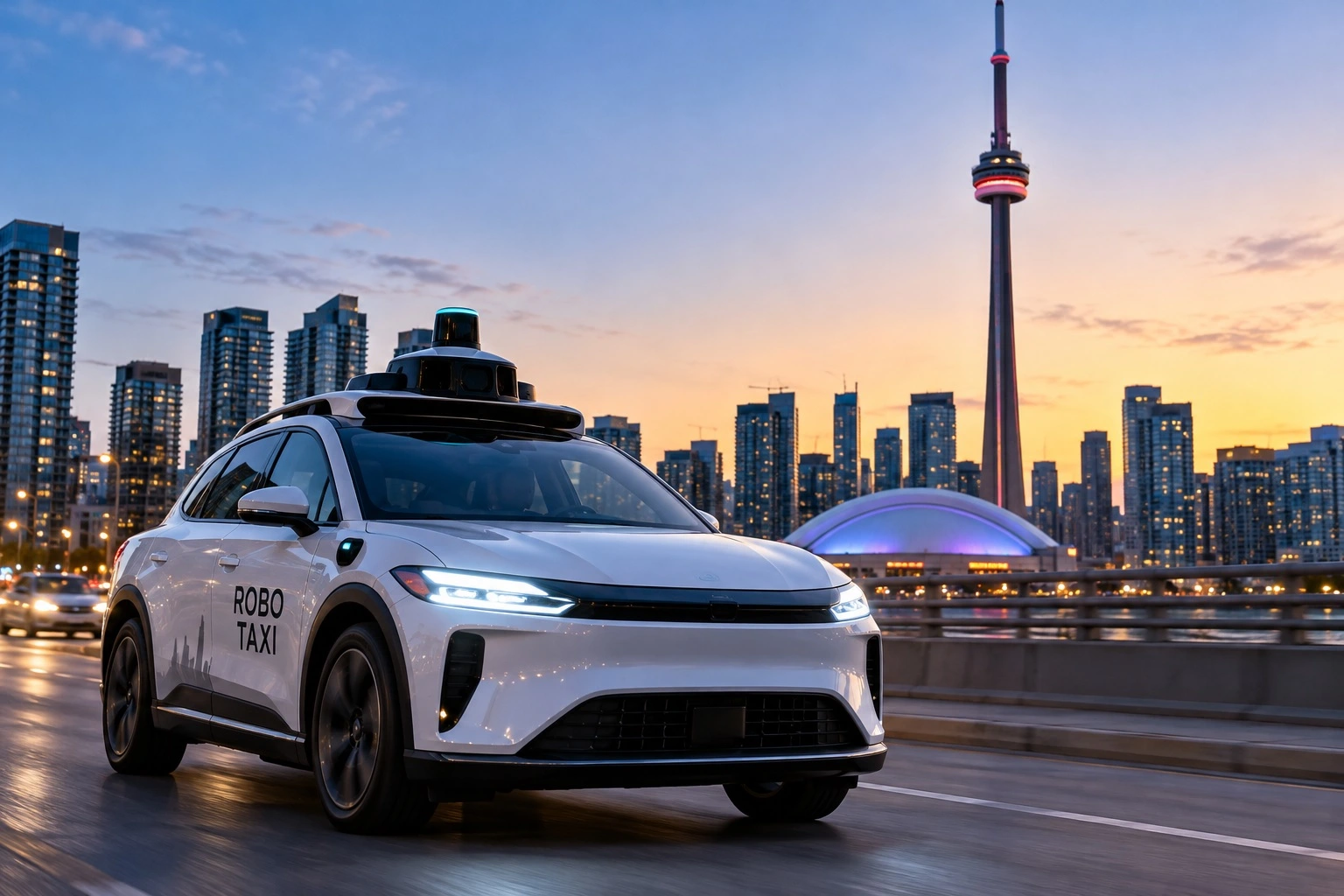
Self-driving taxis are coming to Toronto, and they could change how people get around the city.
On October 16, 2026, Waymo announced plans to bring its autonomous ride-hailing service to Toronto, with a public launch targeted for 2028. Toronto will be the company’s first Canadian city.
When Will Robotaxis Be Available in Toronto?
Waymo is targeting 2028 for its first passenger rides. It has not yet announced a final service area or a date for rides without a trained specialist on board.
In the meantime, Waymo has received approval to begin testing under Ontario’s Automated Vehicle Pilot Program. Its vehicles will first be driven manually to build detailed maps of Toronto’s streets. Testing will then continue with trained specialists behind the wheel. Further permits will be needed as the company moves toward commercial service.
Waymo plans to start with a limited number of all-electric Jaguar I-PACE vehicles and expand gradually. It is also partnering with Toronto-based Element Fleet Management to support its operations.
Where Will Waymo Test in Toronto?
Waymo says testing will take place in select neighbourhoods across the city, including:
- Downtown Toronto and Harbourfront
- Liberty Village and Parkdale
- Yonge and Eglinton
- Don Mills and East York
- Yorkdale
- Mimico and Etobicoke
Toronto will be a demanding test. Busy intersections, streetcars, cyclists, construction zones and winter weather will all challenge the technology. Waymo says testing may run at any hour of the day.
What Does This Mean for Toronto Car Insurance?
The arrival of robotaxis raises an important question: Who is responsible if a self-driving vehicle causes an accident?
With a regular vehicle, insurers look at the driver, the vehicle and the circumstances of the accident. When software is doing the driving, assigning responsibility gets more complicated.
In 2018, the Insurance Bureau of Canada (IBC) published recommendations on how automated vehicles should be insured.
Its main proposal is a single insurance policy that covers both driver negligence and automated technology failures.
Under that model, an injured person would claim through the automated vehicle’s insurer, regardless of whether a human or the technology was in control. The IBC also recommended that manufacturers share vehicle data with owners and insurers, so it’s clear who or what was in control at the time of a collision.
The goal is to get accident victims compensated quickly, without waiting through lengthy product liability disputes.
These are recommendations only. They have not been adopted into Ontario’s insurance system.
Will Self-Driving Cars Make Car Insurance Cheaper?
It’s too early to say.
In theory, automation could reduce crashes caused by human error. But these vehicles also bring new costs, including sensors, computer systems, software risks and expensive repairs.
For drivers who own and operate their own vehicles, Toronto car insurance premiums will still depend on factors such as driving history, vehicle type, location and claims experience.
What’s Next for Toronto?
Public rides are still targeted for 2028, but you may see Waymo vehicles on Toronto streets much sooner.
Questions remain about safety, regulation, insurance and how robotaxis will share the road with everyone else.
Whether they end up making travel around Toronto safer, cheaper or more convenient remains to be seen.